

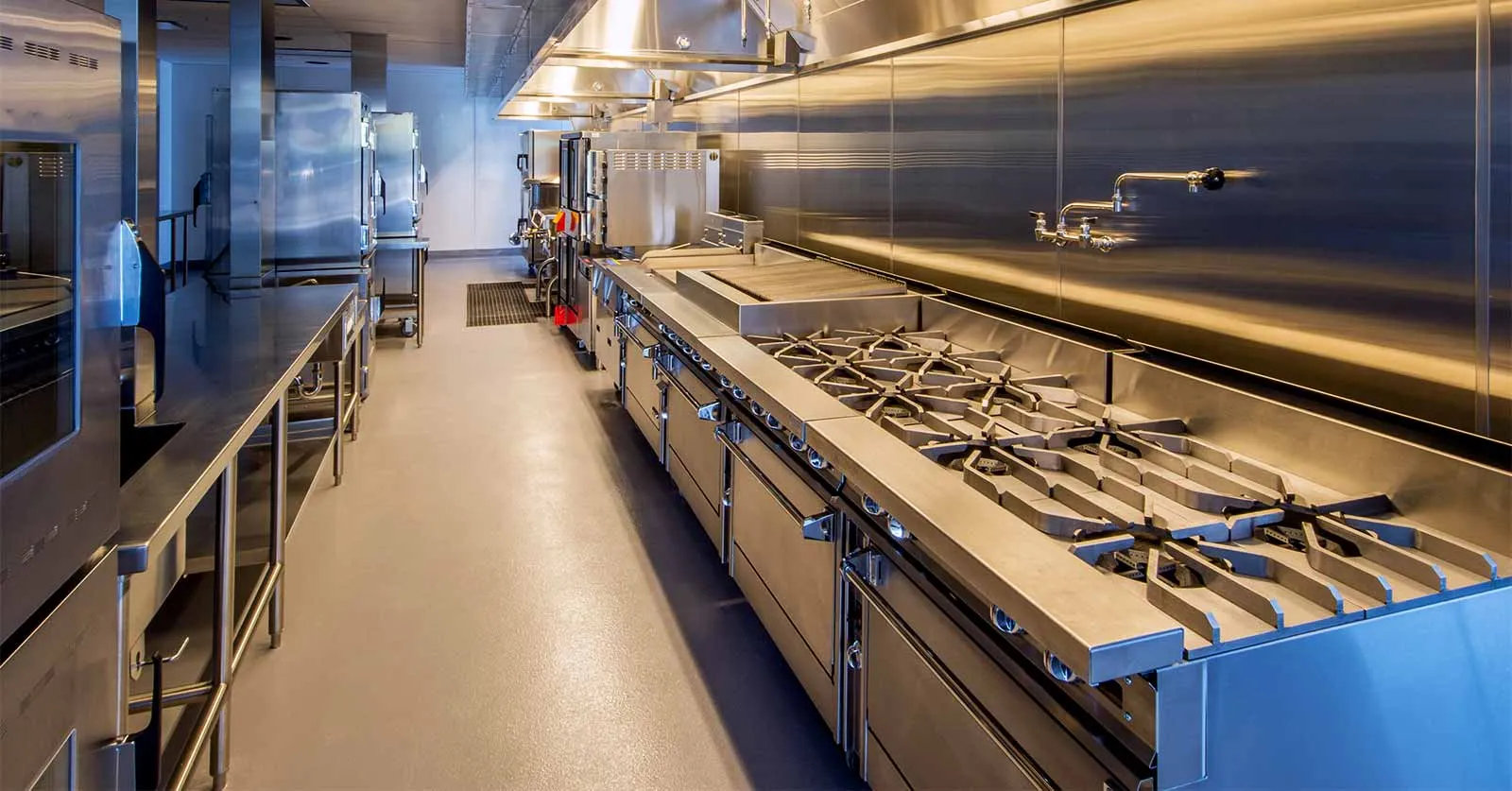
Few floors work as hard as the one under a commercial kitchen line. Grease, boiling water, dropped pans, and relentless cleaning chemicals attack the surface from every direction, while inspectors expect it to stay sanitary. Many Bay Area operators turn to commercial kitchen epoxy floor coatings to meet those demands with a seamless, easy-to-sanitize surface. This article looks at what a kitchen floor must survive, how the right system is specified, and which details separate a floor that lasts from one that causes headaches.
The Four Enemies of a Kitchen Floor
Every kitchen floor faces the same four enemies: heat, grease, water, and impact. Fryer oil drifts onto the surface and turns slick, mop water seeps into porous materials, and heavy stockpots clatter against hard ground. Sanitizers and degreasers also eat away at weaker finishes. A floor that resists only one or two of these threats will eventually fail under the others. Recognizing all four helps owners ask smarter questions when comparing systems, and it explains why thin sealers rarely survive a busy service.
Why Seams and Grout Lines Cause Trouble
Tile and grout look tidy at first, but grout lines absorb moisture, harbor bacteria, and crack under repeated heavy loads. A seamless resinous surface removes those hiding places, which makes cleaning faster and inspections less stressful. Fewer seams also mean fewer repairs. Because the coating flows across the entire floor and up the walls, there are far fewer joints where grease and water can collect. For kitchens that wash down daily, that continuous surface is often the single biggest sanitation improvement available.
Surviving Thermal Shock
Commercial kitchens swing between extremes. Boiling water from a pot, steam from a dishwasher, and cold rinse water can strike the same patch of floor within minutes. Rapid temperature change stresses ordinary coatings and can cause cracking or delamination. Systems designed for thermal shock use specialized resins and a thicker build to tolerate those swings. Share your equipment list and cleaning routine with the installer so the recommendation reflects real conditions, not a generic assumption about what a restaurant needs.
Coving, Drains, and Transitions
Details at the edges decide whether a floor stays hygienic. Integral coving curves the coating up the wall, removing the sharp corner where grime usually builds. Floors should slope toward drains so water leaves instead of pooling beneath prep tables. Treat drain surrounds, door thresholds, and equipment bases with care, since those junctions take the most abuse. Ask how the contractor handles transitions between rooms, because a flawless field surface can still fail at an unsealed edge or poorly finished joint.
Traction Where It Counts
Safety in a kitchen is about traction as much as cleanliness. Grease and water make slips a leading cause of workplace injuries, so the surface needs enough texture to grip boots without becoming impossible to scrub. Aggregate broadcast into the coating creates that grip, and the coarseness can be tuned by zone. Fryer and dish areas may need more bite than a dry storage corridor. Balance matters, because overly rough floors trap dirt while overly smooth ones become hazardous when wet.
Zoning the Dining Room and the Back of House
The dining room and back hallway have different needs than the cook line, which is where commercial floor coatings can be adapted to each zone. Customer-facing areas may call for decorative colors, quartz blends, or a polished look that matches the brand, while back-of-house spaces prioritize toughness. Using one family of products throughout keeps transitions clean and maintenance simple. Consider lighting and foot traffic too, because a well-chosen finish can brighten a space, hide scuffs, and reflect the personality guests remember after the meal.
Scheduling Around Service
Closing a restaurant costs revenue, so scheduling is part of the project. Many installers work in phases, finishing the kitchen while the dining room stays active, or the reverse. Fast-curing systems shorten shutdowns, and overnight or early-morning shifts reduce disruption further. Provide a clear calendar of deliveries, inspections, and busy periods so crews can plan around them. Agree in writing on cure times before equipment returns, because moving heavy appliances onto a soft floor can undo hours of careful work.
Conclusion
A kitchen floor earns its keep by handling heat, grease, water, and impact while staying easy to sanitize. Look for seamless construction, thoughtful coving, reliable traction, and a system matched to your equipment and routine. Plan the schedule around service, and keep up gentle, consistent cleaning. When you want to discuss a coating plan for your own restaurant or commercial space, explore rhynopoxy.com and send over your questions. A floor chosen with care will quietly support every service, every inspection, and every busy Friday night.