

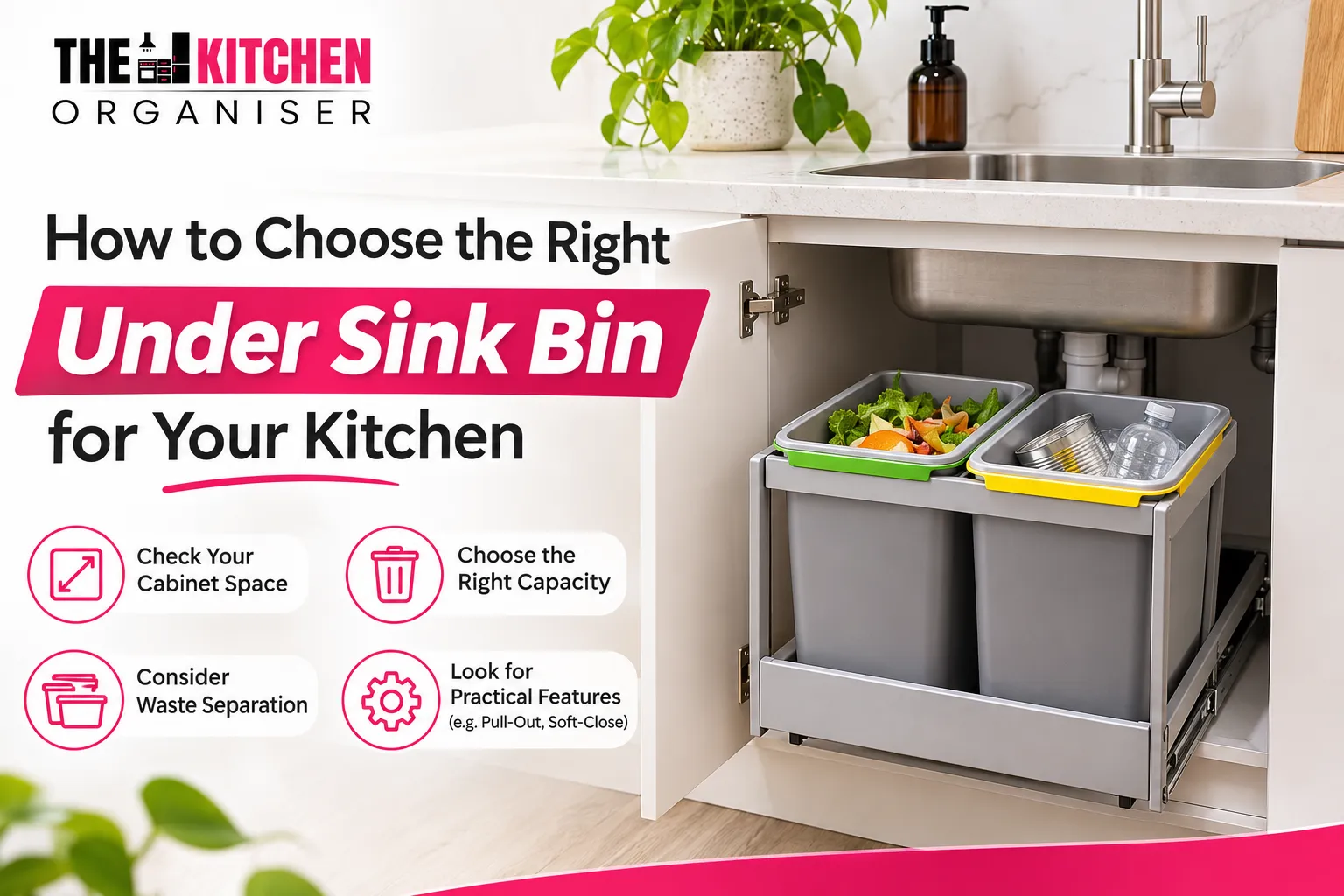
A bin standing in the middle of the kitchen gets kicked, knocked over and walked around a dozen times a day. Moving it into the cupboard beneath the sink fixes that, and puts rubbish right where you rinse plates and peel vegetables. An under sink bin is a waste container designed to fit inside that cupboard, either sitting on the floor, fixed to the door or sliding out on runners. The catch is that this cupboard is also home to pipes, taps and valves, so choosing a kitchen under sink bin is mostly about fit. This guide walks through measuring, sizing and choosing a style that works in a real Australian kitchen.
What Is the Best Type of Under Sink Bin?
For most households, a pull-out double bin is the best choice. It slides forward on runners so you never reach into the back of the cupboard, and two buckets let you separate general rubbish from recycling. Door-mounted bins suit cupboards crowded with plumbing, while fixed bins are the simplest, lowest-cost option.
|
Type |
How it works |
Best for |
Watch out for |
|
Pull-out bin |
Slides forward on runners |
Everyday convenience, deeper cupboards |
Needs clear depth for the runners |
|
Door-mounted bin |
Fixes to the inside of the door and swings out with it |
Narrow or pipe-heavy cupboards |
Door and hinges must take the weight |
|
Fixed in-cupboard bin |
Sits on the cupboard floor |
Simple setups, rentals |
Harder to reach behind the trap |
|
Double or triple bin |
Two or three buckets in one frame |
Recycling and FOGO households |
Each bucket is smaller than the total suggests |
How Do You Measure a Cupboard for an Under Sink Bin?
Measure the internal width, internal depth and the clear height beneath the lowest pipe, then compare those numbers with the installation dimensions on the product listing. Never use the outside size of the cabinet. A 450 mm cabinet usually leaves only around 410–420 mm between the side panels once board thickness and hinges are counted.
Work through these checks with a tape measure:
-
Internal width: side panel to side panel, at the narrowest point, including any hinge plates.
-
Internal depth: from the back of the closed door to the rear wall or pipe, whichever comes first.
-
Clear height: from the cupboard floor to the bottom of the sink bowl, waste trap or lowest fitting.
-
Pipe positions: note whether the trap sits centrally or off to one side. An off-centre trap often leaves room for a narrow bin beside it.
-
Isolation valves: the shut-off taps for hot and cold water must stay easy to reach in an emergency, so don’t block them.
-
Extra fittings: dishwasher hoses, water filters and instant hot water units all take space and need access for servicing.
For a pull-out system, also open the cupboard door fully and check that the bin can slide all the way out without hitting the door, handle or a nearby drawer.
What Size Under Sink Rubbish Bin Do You Need?
Most couples are well served by 20–30 litres, small families by 30–40 litres and larger families by 40–60 litres or a multi-bucket system. Your council collection schedule and how much you recycle matter as much as household size.
|
Household |
Suggested total capacity |
|
Single person |
10–20 litres |
|
Couple |
20–30 litres |
|
Small family |
30–40 litres |
|
Larger family |
40–60 litres, or a double or triple system |
When comparing under sink rubbish bins, look at the size of each bucket, not just the total. A 30-litre double bin holds two 15-litre buckets, so if general rubbish fills up fastest, choose a model with a larger general-waste bucket and a smaller recycling one. Compact options start around 19 litres, such as the single bin in the Kia Ora OPTIO range, which suits apartments and narrow cupboards.
Should You Choose a Single or Double Under Sink Bin?
Choose a double bin if you sort recycling in the kitchen, and a single bin if cupboard space is tight or you already keep recycling elsewhere. Households with a FOGO (Food Organics and Garden Organics) service may benefit from a triple bin or a small separate caddy for food scraps.
Check what your council collects before you buy. A double bin that matches your kerbside bins makes sorting automatic.
How Do You Fit a Bin Around Kitchen Plumbing?
Pick the bin shape to suit where the pipes sit. A low-profile bin works under a deep sink bowl, a narrow bin fits beside an off-centre trap, and a door-mounted bin uses space in front of the pipes that a floor bin can’t reach.
Keep the bin clear of hoses so it can’t rub or pinch them. If a water filter or hot water unit fills most of the cupboard, fit the bin in the next cupboard along instead. And glance at the pipes when you empty the bin, because a slow leak caught early saves a swollen cupboard floor.
What Features Should a Kitchen Under Sink Bin Have?
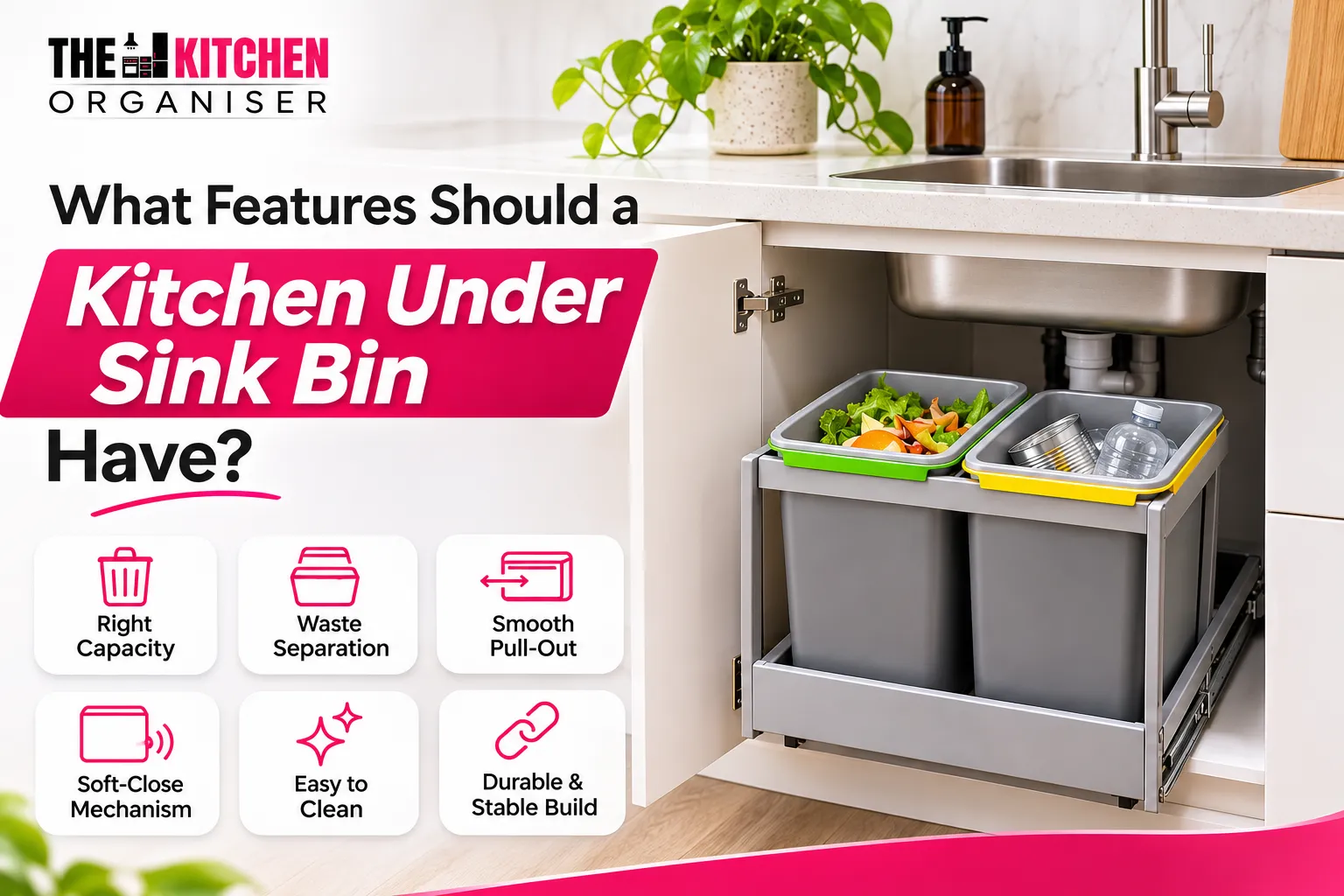
The features that matter most are smooth runners, removable buckets, durable materials and installation hardware that suits your cupboard.
-
Smooth runners: soft-close runners reduce noise and stop the frame slamming back.
-
Removable buckets: lift each bucket out without unscrewing anything.
-
Easy-clean materials: smooth plastic buckets and corrosion-resistant frames handle the damp under a sink.
-
Lids: help contain odours, though regular emptying matters more.
-
Mounting hardware: check whether the bin fixes to the floor, side panels or door, and that brackets are included.
-
Replacement parts: brands such as Wesco and Kia Ora sell replacement buckets and lids.
How Do You Keep an Under Sink Bin Clean?
Empty food scraps often, wash removable buckets in warm soapy water every week or two, and let them dry completely before putting them back.
Use liners sized to the bucket, and wipe the runners and cupboard floor when you clean, because crumbs and drips build up out of sight.
Why Choose The Kitchen Organiser?
The Kitchen Organiser specialises in kitchen storage and waste systems built for Australian cupboards, including plenty of under sink rubbish bins designed to work around plumbing.
-
Pull-out, door-mounted and fixed bins from brands including Wesco and Kia Ora.
-
Sizes for every cupboard, from compact 19-litre singles to 60-litre-plus doubles.
-
Replacement buckets and lids to keep your bin going for years.
-
Free shipping Australia-wide on orders over $200.
About Us
The Kitchen Organiser is an Australian online store for people who want kitchens that are easier to live with. We stock kitchen bins, drawer and pantry organisers, corner fittings and laundry storage from trusted brands, and we focus on helping you find products that fit the space you actually have.
Frequently Asked Questions
Can you put a bin under the kitchen sink?
Yes. Most sink cupboards can hold a bin as long as it fits around the plumbing. Measure the internal width, depth and clear height under the lowest pipe, and keep the isolation valves accessible. Door-mounted and compact pull-out bins suit tight cupboards.
What size bin fits under a kitchen sink?
It depends on the cupboard, but most standard sink cupboards fit a bin between 20 and 40 litres. Always measure the internal space and compare it with the product’s installation dimensions rather than the cabinet’s outside size.
Is a pull-out or door-mounted under sink bin better?
A pull-out bin is better for everyday convenience and larger capacity, because it slides fully forward. A door-mounted bin is better for narrow cupboards or ones crowded with pipes, because it uses the space just behind the door.
Do under sink bins smell?
They can if food scraps sit too long in an enclosed cupboard. Choose a bin with a lid, empty food waste often, wash buckets regularly and let them dry before refitting.
Final Thoughts on Choosing an Under Sink Bin
The right kitchen under sink bin comes down to three things: accurate internal measurements, a capacity that matches your household and council collection, and a style that suits where your pipes sit. Get those right and you’ll free up floor space, make recycling easier and keep the cupboard under the sink working for you rather than against you.