

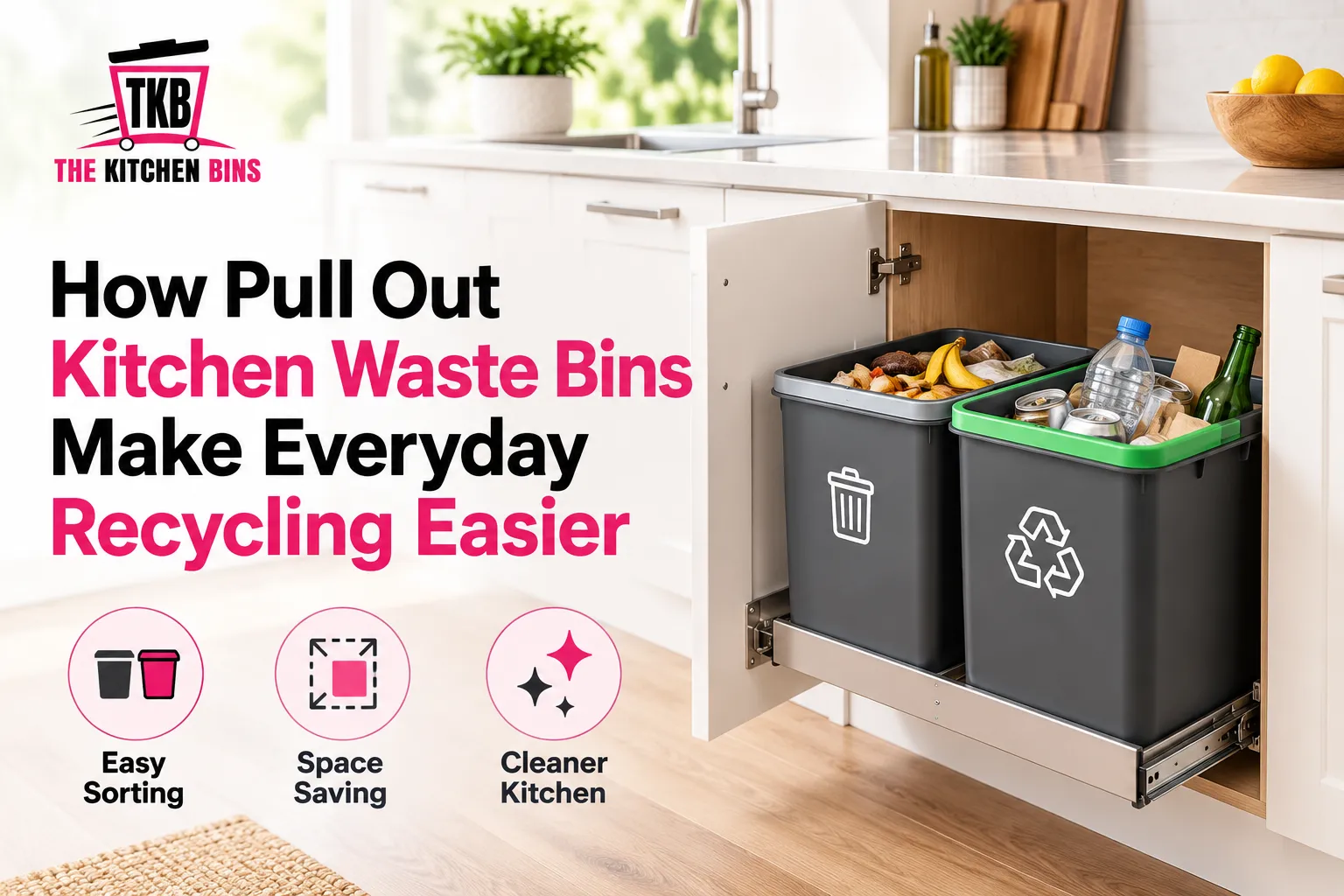
Most kitchens produce two kinds of rubbish at the same time: waste headed for landfill and packaging that should be recycled. When there’s only one bin under the bench, or a recycling bag slumped against the pantry door, sorting becomes a chore that’s easy to skip.
Pull out kitchen waste bins solve that by giving each type of waste its own bucket, tucked inside a cupboard and ready the moment you open the door. This guide covers how they work, what to measure before you buy and how to choose a setup that suits the way your household actually cooks and cleans.
Why Sorting Waste in the Kitchen Helps
Recycling usually goes wrong at the moment something is thrown away. If the right container isn’t within reach, a rinsed yoghurt tub or an empty cereal box tends to end up in general rubbish.
Australian councils run different collection services, and what’s accepted in kerbside recycling varies between areas, so check your council’s list first. Once you know the rules, sorting inside the kitchen saves you from re-sorting at the wheelie bin and makes the habit easier for everyone in the house to follow.
How Pull Out Kitchen Bins Work
Pull out kitchen bins are mounted inside a base cabinet on sliding runners. The buckets stay hidden behind the cupboard door and glide forward when you need them. Depending on the model, the frame fixes to the cabinet floor or side panels, and some designs attach to the door so the bins slide out as it opens.
Many systems use buckets you can lift out, empty and wash. Better units add full-extension runners, which bring the rear bucket within easy reach, and soft-close slides that stop the door from banging shut.
Double Bins Keep Rubbish and Recycling Side by Side
For recycling, a double pull out bin is the simplest upgrade. One bucket takes general waste, the other takes clean recyclables, and both sit in the same cupboard, so there’s no second bin crowding the floor.
Capacities vary widely. The Kia Ora 34L OPTIO, for example, splits its capacity into two 17L buckets, while the Wesco 64L Double Pull Out Kitchen Cupboard Bin offers considerably more room for larger households.
If your council also collects food scraps, keep in mind that a double bin only covers two waste streams. A small benchtop caddy can take care of the third.
Fitting a Pull Out Bin Under the Sink
The cupboard beneath the sink is often a jumble of cleaning products and awkward pipes. A pull out bin under sink turns part of that space into a waste station right where you rinse containers and scrape plates.
Plumbing usually decides what fits, so measure carefully before ordering:
-
Internal width between the cabinet walls, not the nominal cabinet size
-
Depth from the door to the back panel
-
Height beneath the sink bowl and around the trap
-
Clearance for the runners and door hinges
Compare these numbers with the product’s full installation dimensions rather than relying on its capacity in litres.
Choosing the Right Setup for Your Household
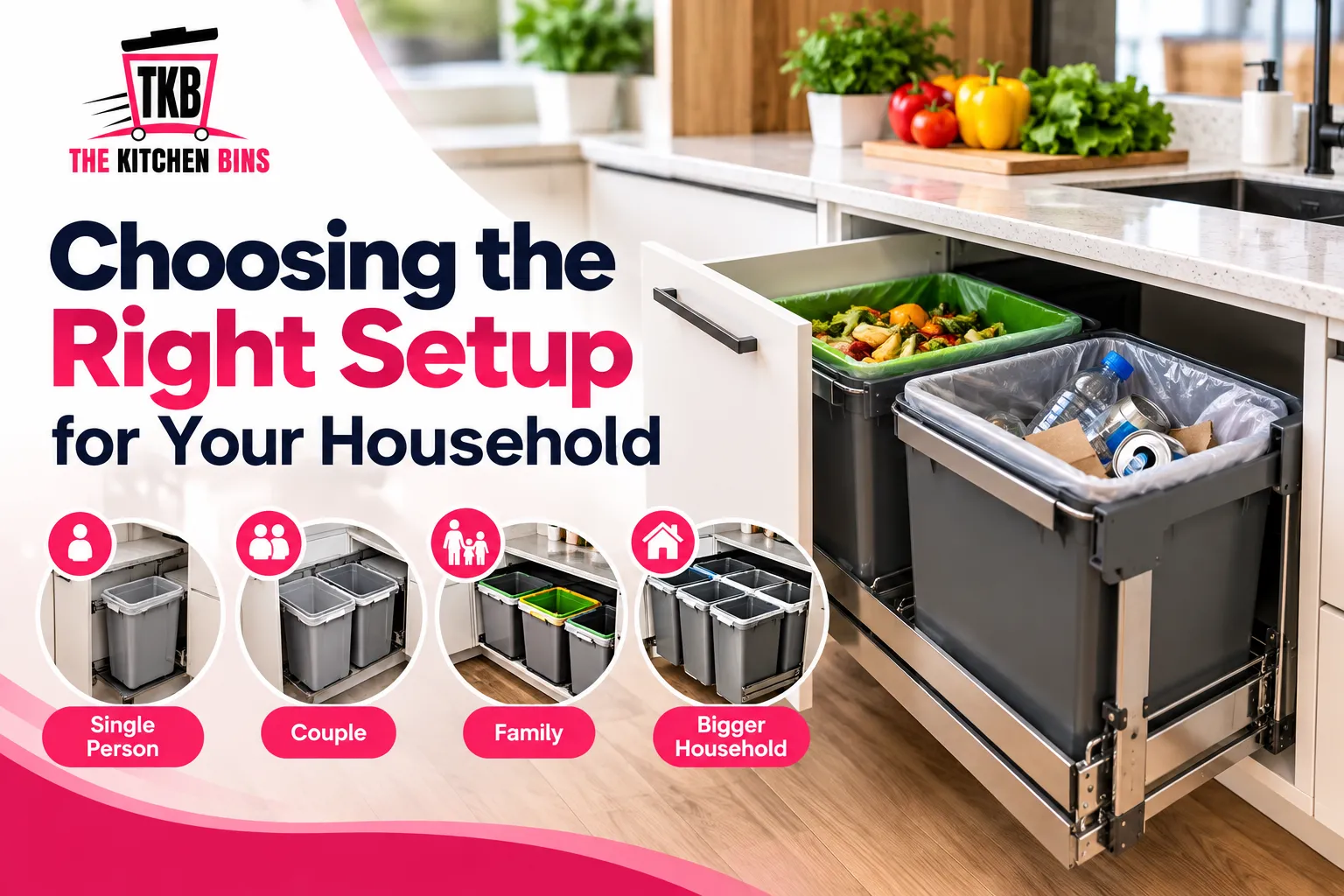
Start by matching the number of buckets to the waste streams you actually separate. Then pick a capacity that fits your cupboard and how often you’re happy to empty the bins.
|
Setup |
Works well for |
|
Single pull out bin |
Small households or a second waste point |
|
Double pull out bin |
Separating rubbish and recycling |
|
Compact pull out bin under sink |
Apartments and tight sink cupboards |
|
High-capacity double bin |
Larger families with more daily waste |
More compartments aren’t automatically better. A bin that’s heavy to lift when full, or one that blocks access to everything else in the cupboard, soon becomes a nuisance.
Frequently Asked Questions
Are pull-out bins worth it?
Pull-out bins are worth it for many households with a suitable base cupboard. They free up floor space, keep rubbish out of sight and make it easier to separate general waste from recycling. Their value depends on choosing a model that fits your cabinet and suits how much waste your household produces.
Are pull-out bins sanitary?
Pull-out bins are sanitary when they are emptied and cleaned regularly. Enclosing waste in a cupboard hides it from view, but it doesn’t stop odours or bacteria on its own. Removable buckets, bin liners and wiping up spills promptly help keep both the bin and the cupboard hygienic.
What are the best pull-out kitchen bins?
The best pull-out kitchen bins are the ones that fit your cabinet and match the waste streams you separate. Well-known brands sold in Australia include Wesco, Kia Ora, Hailo, Hideaway and Häfele. Compare internal cabinet dimensions, bucket sizes, runner quality and how easily the buckets lift out for cleaning.
What is the best pull-out waste bin?
For households that recycle, a double-bucket pull-out waste bin is often the most practical choice, provided it fits the cupboard properly. Look for smooth full-extension runners, removable buckets and clear installation dimensions. A single-bucket model can suit smaller households or kitchens with limited cupboard space.
Why Choose The Kitchen Bins?
-
Kitchen bins are all they do: pull-out, door-mounted and free-standing systems, plus replacement buckets
-
Sorted by cabinet width: shop 400mm, 450mm, 500mm and 600mm cabinets, not just litres
-
Trusted brands: Wesco, Kia Ora, Hailo, Hideaway and Häfele
-
Parts, not just bins: replacement buckets for selected Wesco, Hailo and Häfele systems
-
Easy to buy from: free shipping on orders over $200 and 30-day returns
-
Help before you order: knowledgeable support to check what fits your cupboard
About The Kitchen Bins
The Kitchen Bins is part of The Storage Shop, a 100% Australian-owned business that has been helping homeowners organise their spaces since 1992. The Storage Shop was founded by a cabinet maker who saw how much a well-chosen upgrade, such as an under-sink bin system, could improve a kitchen without the cost of a full renovation.
Today, The Kitchen Bins offers a curated range of pull out kitchen waste bins and cabinet bin systems, delivered to customers across Australia. A bin that fits your cupboard and matches your council’s waste streams turns recycling into part of the daily routine rather than an extra job.